
Simulators : GXS
Gas detector simulator for confined space training
Delegates must always be safe during workplace safety training, but they need the most realistic experiences possible to assist with skills retention and accurate assessment of competence. During confined space entry, workers rely on electronic gas detectors to monitor concentrations of oxygen, toxic and flammable gases but these can only be triggered by the hazards they are designed to detect, so cannot be used in training exercises - but to be competent, workers must be trained and assessed in how to react when an alarm activates.
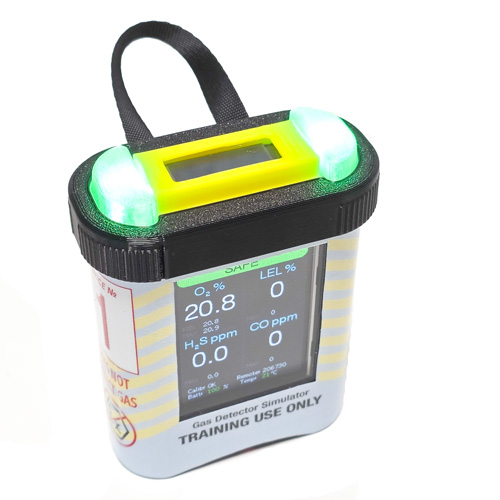
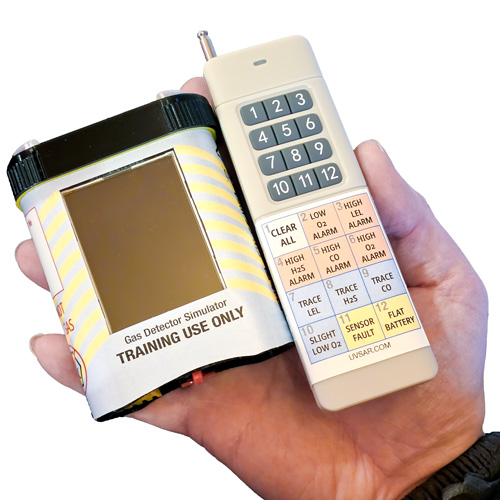
GXS is a compact realistic device used by the delegate, but controlled by the course instructor using a long distance radio remote control. It can be used in the classroom to demonstrate EN-standards-compliant alarms and fault signals, and during practical training to trigger various alarms or trace gas levels during pre-entry testing, ventilation or escape breathing apparatus exercises.
These products are NOT intrinsically safe or ATEX rated and must NEVER be taken into a flammable atmosphere.
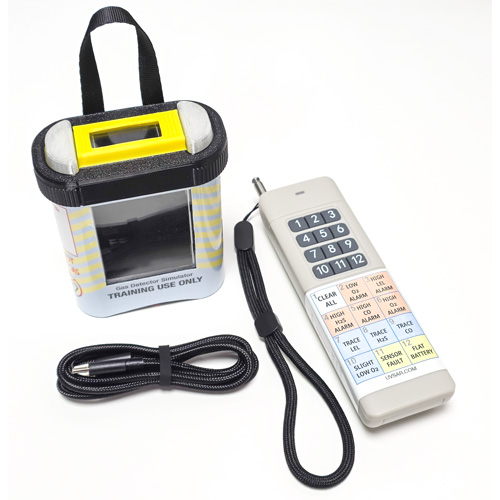
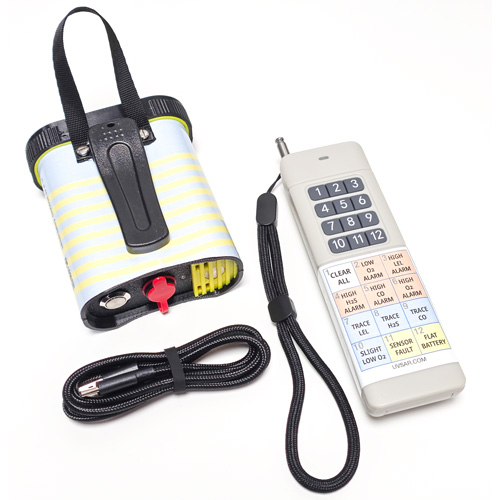
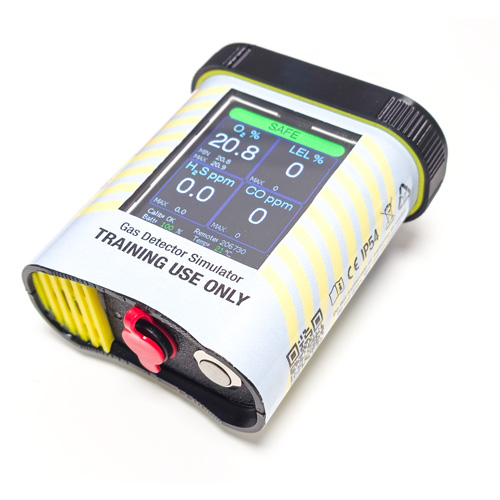
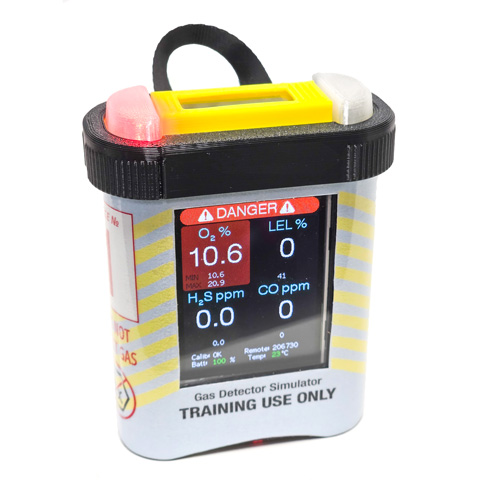
How does it work?
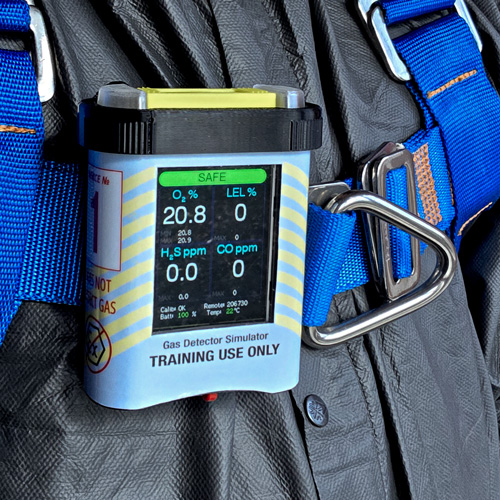
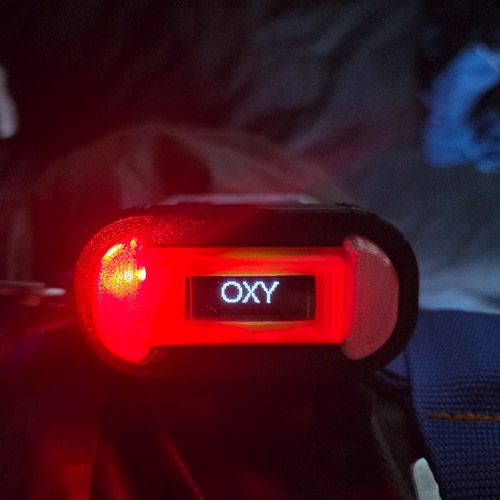
The display simulates measurements of four atmospheric conditions; oxygen concentration (in %), lower explosive limit (LEL, in %), carbon dioxide (in ppm) and a user-selectable "main gas" (in ppm) that can be either hydrogen sulphide or chlorine - custom gases can be programmed on request. A secondary message display on the top can be immediately seen by the user when the device is clipped to a chest harness. Alarms and fault conditions generate visual, audible and vibration alerts.
In reality the measurements are controlled by the instructor using a radio remote control. This can trigger or clear various combinations of trace or hazardous gas concentrations, device faults, low battery alarms, etc. to meet any requirements of the training syllabus.
GXS uses the EN standard colors for gas alarms and faults, but it is not a substitute for brand-specific user instruction (e.g. for inspectors or repair techs).
Specifications
Each simulator is supplied with a 12-button remote control and USB charging cable. Kits of one or two are available, in a rugged carry case. Replacement remote controls are available.
- Unit dimensions: 100x75x50mm, 175g
- Attachment: belt clip + webbing safety loop
- Display: Color TFT / white OLED
- Battery: Internal rechargeable
- Running time: Up to 12 hours
- Charging: USB-C, 5V at 1A
- Weatherproof: IP54 equivalent
- Remote range: Up to 50m in typical training structures (wood, concrete or plastic tunnels). Signals cannot penetrate metals or soil.
- Radio band: 433MHz (UK/EU license-free)
Ordering information
These products are assembled to order and can be customized for the purchaser; typical lead time is one week.
For more information or to place an order please contact us.
Simulators and remotes have device numbers for easy management, so if you are re-ordering please let us know the numbers you need.
Current pricing (excluding VAT and shipping):
- Single kit: £ 69.00
- Twin kit: £ 105.00
- Spare remote: £ 7.00
We can only sell to UK customers for professional use in the delivery of training. We cannot export this product.
We will not supply any of our simulators if we believe they will be mis-represented as safety equipment.
Frequently-asked questions
- Is this suitable for all confined space training schemes?
- GXS can simulate every feature and alarm condition required by CABWI, City & Guilds or NOS lesson plans. The only thing it cannot be used for is manufacturer-specific calibration or repair technician training.
- Why not just use a real detector?
- Genuine 4-gas detectors can be expensive (UK-certified devices are typically more than £200, add in a calibration station and accessories and the cost to equip a class can be over £5000) but cost is not the issue! Real sensors can never be activated during training, as by definition that would mean a danger to life. Our simulators allow for situations which the training schemes require delegates to experience but without real hazards.
- Why can't I just buy from your website?
- We must be certain these products are only used for training purposes, so as a responsible manufacturer we do not sell to the general public. If you are an instructor or training provider operating in the UK, we are happy to supply products to you - just tell us what you need.
- Why don't you ship outside the UK?
- There are restrictions on international shipment of devices with lithium batteries that make export sales very expensive, but the main reason we only sell to UK customers is standards compliance. These simulators appear to be something they are not, which is the entire purpose for using them. Customs are likely to impound them for that very reason.
- We train people to work with specialist gas XX, can the simulator show it?
- Yes, provided it is something that would normally be detected by an electronic sensor then we can reprogram units (even remotely) to display that gas.
- Is this safe for on-site training?
- Only in non-hazardous areas. The simulator and remote control are not intrinsically safe and must never be taken into a flammable atmosphere. Of course training must never take place in a toxic or irrespirable atmosphere, even if it would not damage the product.
- Can we take it on a plane or send it in the post?
- Yes, by enabling "shipping mode" in the configuration menu. This mode ensures the device cannot accidentally turn on in transit. Note that GXS contains a lithium iron phosphate (LiFePO4) battery so there may be restrictions on aircraft baggage and some parcel carriers will apply special insurance rates. The radio frequencies these products use are legal in the UK and Europe (EU/EEA).
- What about "bump" tests or remote sampling?
- A simulated bump test station and a hand pump and tube adaptor for teaching delegates how to sample remotely are available as an optional extra.
- Can the simulator be washed?
- The simulator is water-resistant and designed to be used in damp conditions (e.g. in the rain) but should not be immersed in water. Units can be cleaned by wiping with a damp cloth. The radio remote is not water-resistant.
- What happens if it breaks?
- Damaged units can be returned to us for repair or recycling; we give purchase credit on reclaimed components. Spare remotes are available to buy.
- What if we lose the remote?
- You can easily re-pair the simulator to a new remote via the menu screens. This also means you can pair several units to the same remote if you want them to all activate together (but for most training scenarios that would not be appropriate).
- I'm worried that someone might steal it
- Every simulator displays the owner's name each time it starts. This information can only be changed during software updates and at the request of the owner, so a stolen device is traceable and can be remotely disabled when anyone tries to update it.
- How many do we need?
- Every entrant in a medium or high risk exercise should carry a simulator, but larger groups (of 4 or more) often share them. For low risk and "top person" training one simulator is used to test the atmosphere. Delegates using full-time breathing apparatus (in high risk or rescue) do not use gas detectors. Most UK confined space training will run exercises with groups of 2 entrants plus a top person, so we would suggest 2 or 4 simulators as a starting point.